
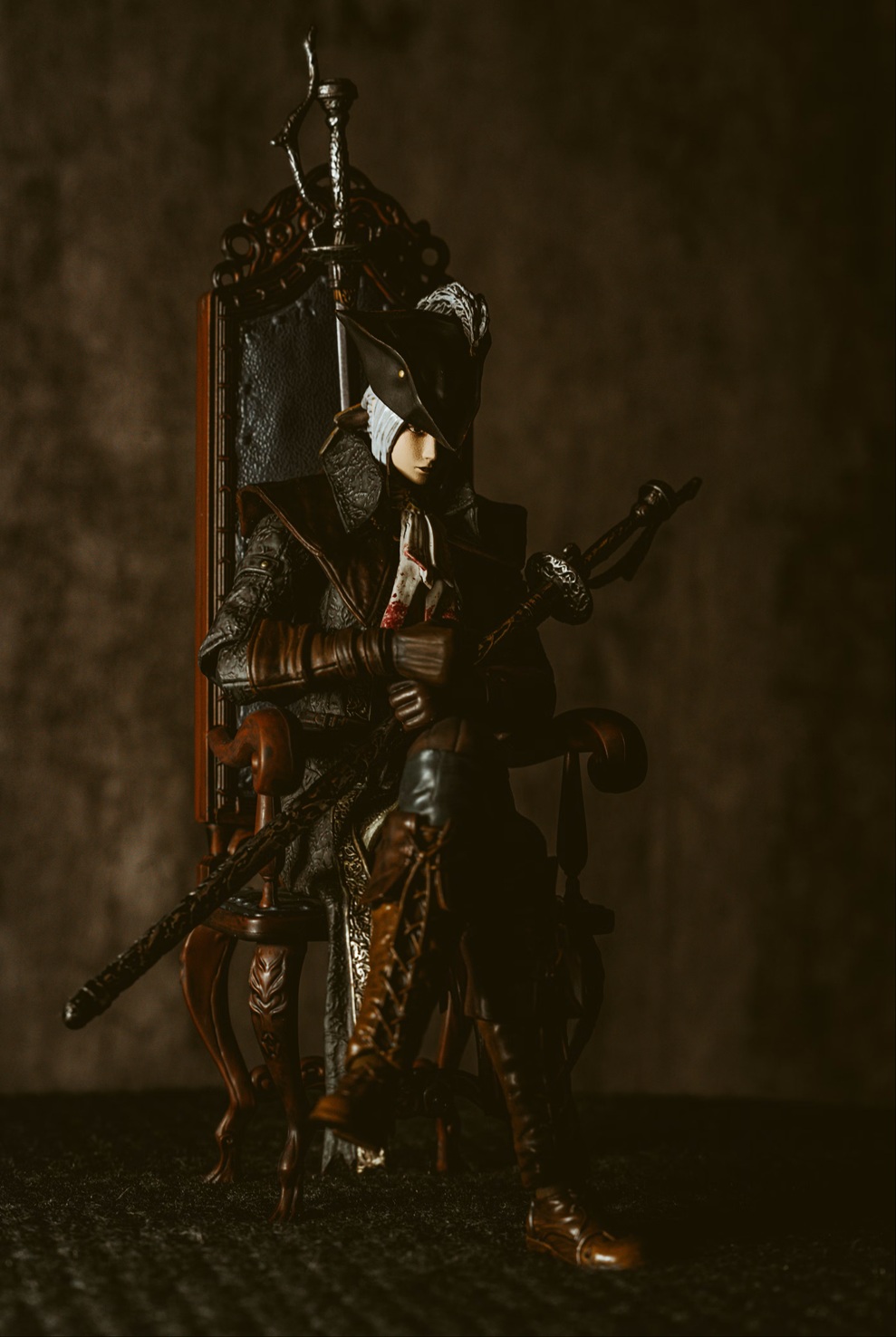
I’ve brought some interesting thoughts, and some research on the topic along with them.
In older soulslikes you almost always, or at least often, had to make a long run back to the boss after losing a fight. Players cursed this boss and level design, yet kept giving the games high scores. Bloodborne is a prime example.
Current trends show that developers are responding to players whining “it’s sooo far to ruuun, I don’t wanna! 😭”, and there’s a clear trend now to respawn the player right next to the boss door. Fine.
But here’s the thing. I always felt that the players’ whining, and the developers’ obedient response of meeting them halfway and putting a bonfire right by the boss gate, looked somewhat counterintuitive. After all, the longer and more boring the run to the boss, the harder the player will try to finally beat it, the stronger and deeper the flow state, and the bigger the rush of satisfaction at the moment of victory. That’s what I thought. And I was right!
What’s more! When you run back to the boss after a tense attempt, a rather useful transition between mental states takes place. In theory, this transition is where the reconsolidation of whatever the latest attempt taught the player happens. A kind of background training: during the boring phase of running through the area back to the boss, your combat skill gets optimized and becomes more effective!
Then I went looking for papers that would confirm or refute my theory in any way. I struck gold!
Closest experiment: Cuerdo, Mahajan & Melcer (IEEE CoG 2021). They built a simple 2D platformer that differed only in where you respawn: start of game (permadeath), start of level, last checkpoint, or last manual save. Mastery, immersion and challenge didn’t differ between groups, and the permadeath group scored higher on curiosity than the checkpoint group. Small sample and no bosses, but harsher resets didn’t hurt.
Juul (2009, “Fear of Failing?”). Players who failed a bit and then won rated the game highest, above flawless winners (p=0.06, so borderline). Feeling responsible for your own failure was tied to a higher rating (p<0.016).
Fan (DiGRA 2026 preprint) proposes exactly my mechanism. The traversal after death may act as a spacing interval, letting boss patterns fade slightly so that retrieving them on the next attempt strengthens learning. He lists manipulating checkpoint spacing as future work.
These papers support my theory about long runbacks (turns out there’s a term for returning to the point of death): that they can contribute both to the flow state and to overall satisfaction.
An important caveat! In action games, the boring-runback trick will most likely backfire. In action games the useful mental tension is of a different nature, and diluting it with boring running around will most likely work against quality gameplay and pacing.
A list of good soulslikes grouped by long and short runbacks. Just for reference (year and Metacritic score in brackets):
Long runbacks
- Demon’s Souls (2009, 89; remake 2020, 92). Infamous examples are the Maneaters and Old King Allant’s slow elevator.
- Dark Souls (2011, ~89). The Gravelord Nito runback is the classic hated one, alongside Bed of Chaos.
- Dark Souls II (2014, ~91). Probably the most runback-heavy FromSoftware game. Critics loved it; players are split.
- Bloodborne (2015, ~92). Mixed: some lamps sit right by the boss, but several bosses need a long walk.
- Hollow Knight (2017, ~87–90). Moderate, with some long bench-to-boss walks.
- Hollow Knight: Silksong (2025). The Last Judge is notorious, and Bilewater is worse unless you find a hidden bench.
Short runbacks
- Dark Souls III (2016, ~89). Bonfires are mostly close to bosses.
- Sekiro (2019, ~90, Game of the Year 2019). Sculptor’s Idols are mostly near bosses.
- Elden Ring + Shadow of the Erdtree (2022, 96). Runbacks are rarely punishing; the big exception is the secret boss Dragonlord Placidusax.
- Lies of P (2023, low-to-mid 80s). Widely called the best non-FromSoftware soulslike. Stargazers usually sit right outside the boss room.
- Black Myth: Wukong (2024, ~81). Shrines usually sit right before bosses.
- The First Berserker: Khazan (2025, 80 at launch). Your dropped currency waits right outside the arena, not inside it.